
Serving Cape Coral, Fort Myers, Naples, Punta Gorda, Bonita Springs & North Fort Myers — and everywhere in between.
Patio, pool and lanai screen enclosures, built new or replaced.
A new screen enclosure over your pool, patio or lanai, or a full replacement when the old one is past saving. Aluminum frame, screen, doors and kick plates, from one local crew.
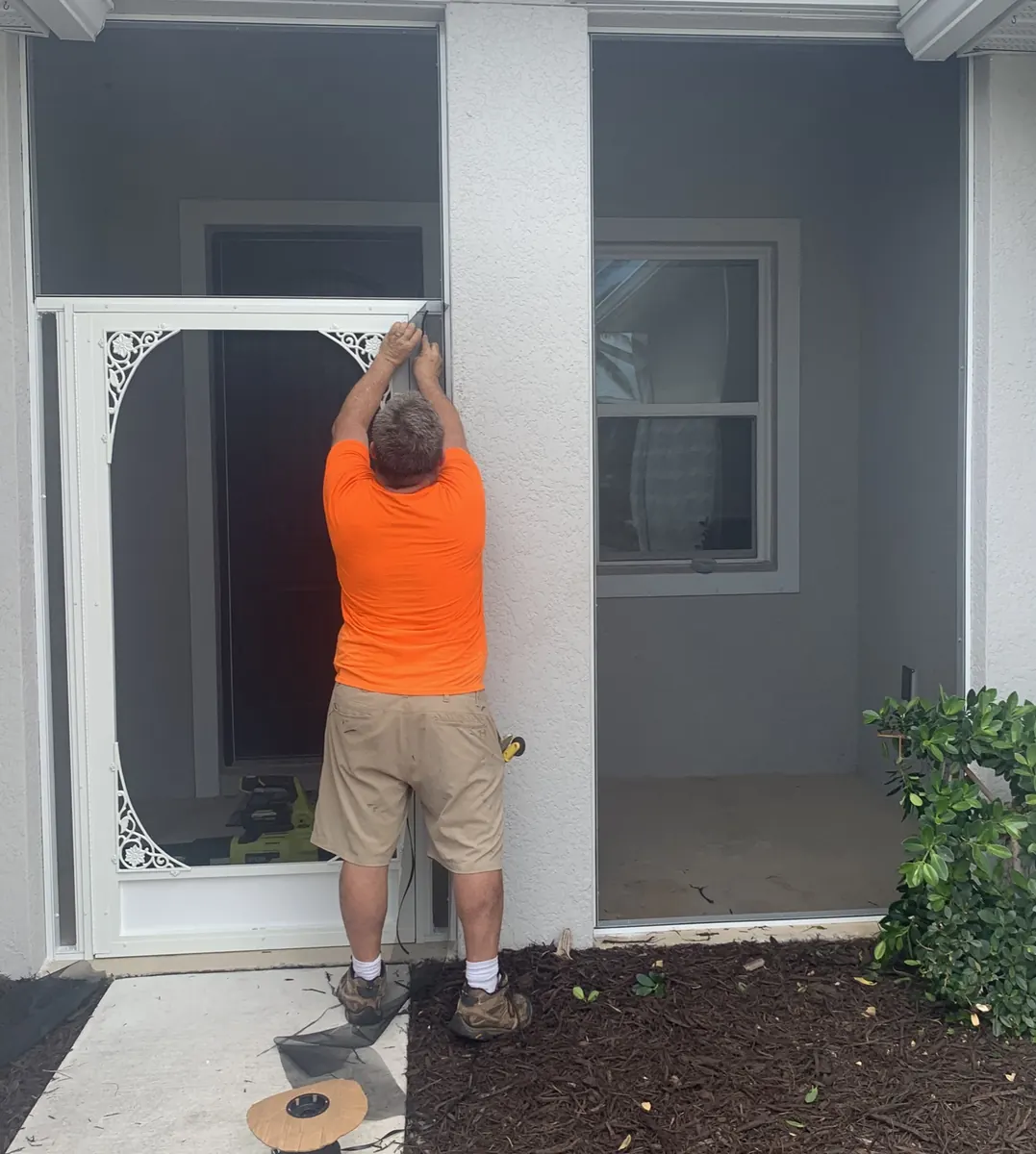
New enclosures and full replacements
A screen enclosure turns a patio, pool deck or lanai into outdoor living space you can actually use from March to November, without the mosquitoes, no-see-ums, leaves and lizards. In Southwest Florida it is less a luxury than the thing that makes the back of the house livable.
We build new enclosures where there has never been one, and we replace old ones frame and all. Replacement is the right call when the aluminum has corroded at the base, members are bent beyond straightening, or a storm has racked the whole structure out of square. If the frame is still sound and only parts have failed, we will tell you, and quote screen enclosure repair or a re-screen instead.
- Pool cages over in-ground pools and pool decks
- Screened patios built on an existing slab
- Lanai enclosures under an existing roof
- Front entryway and porch enclosures
- Tear-out and replacement of failed enclosures
Types of screen enclosures
The biggest choice is the roof. A screen enclosure either has its own screened roof, which is how most pool cages are built, or it sits under the house roof, which is how most lanais and screened porches work. Under-roof enclosures are simpler and cost less, because the walls are all that need screening.
Free-standing cages come in a few common shapes. A mansard roof has sloped sides and a flat top and suits most single-story homes. A dome curves up to a high center and gives a pool a more open feel. A gable or hip roof follows the lines of the house roof so the enclosure looks like part of the home. Two-story cages and picture-window panels, which leave a wide opening with no horizontal bar across your view, are options on any of them.
- Mansard: sloped sides, flat top, the most common pool cage
- Dome: curved roof with extra height over the pool
- Gable and hip: roof lines that match the house
- Under-roof lanai or porch: walls only, no screen roof
What a screen enclosure costs
The honest answer is that it depends on size, height and roof style, and the spread is wide. Screening in a 12x12 patio under a roof you already have is a small job. A 20x20 screened porch with its own roof is a mid-size one. A two-story pool cage with a dome roof and picture windows is a large structural build. Any price you see online without someone measuring your space is a guess.
What moves the number: the footprint and wall height, whether the enclosure needs its own roof, the roof style, the number of doors, the screen you choose, kick plates and chair rails, and how the frame ties into the house and the gutters. The estimate is free and in writing, and if you already have a written quote from another contractor for the same scope, we will beat it.

Built for Florida wind
Hurricane Ian in 2022 took down or twisted thousands of pool cages across Lee and Charlotte counties, and a lot of the replacements going up now are for homeowners who lost one. That is the context every new enclosure here is built in.
A new or replacement enclosure is permitted work in Florida. It has to meet the wind-load requirements of the Florida Building Code, which is why the aluminum sizes, spacing and anchoring are set by engineered drawings rather than by eye. When you compare quotes, check that each one covers the permit and the engineering, and that the frame is anchored to a slab or footing that can hold it.
The connection to the house matters as much as the cage itself. Most enclosures attach at the fascia and carry roof water through a super gutter, so we check the fascia the enclosure will hang from before anything is fastened to it.
Screen, doors and the details
Standard 18x14 fiberglass mesh is the everyday choice and keeps mosquitoes out. Near canals, mangroves and preserves, tighter 20x20 no-see-um mesh is worth it. Pet-grade mesh on the lower panels stands up to dogs, and solar screen takes the edge off a west-facing pool deck in the afternoon. You can mix them on one enclosure.
Doors, kick plates and chair rails are where an enclosure takes daily wear, so we fit them to last: self-closing doors that latch, and kick plates on the lower run so furniture and feet do not go through the screen. When a door needs attention later, we handle screen door repair too.
WWJD has been family-owned since 2007, is licensed and insured to $2 million, and builds every enclosure with no deposit and a lifetime workmanship guarantee.
What you can expect
Simple from estimate to guarantee.
Free on-site estimate
We measure the space, walk through roof style, screen and door options with you, and put the price in writing.
Frame, screen and doors
Our crew builds the aluminum frame, screens every panel with fresh spline and hangs the doors, then cleans up.
No deposit, lifetime guarantee
Nothing is due until the enclosure is finished and you are happy with it, and the workmanship is guaranteed for life.
Good to know
Screen Enclosures questions.
It depends on the footprint, the height, whether it needs its own roof and the roof style, the number of doors and the screen you choose. A small patio screened in under an existing roof costs a fraction of a two-story pool cage. We measure on site and give you a free written price, and we will beat a written quote from another contractor for the same scope.
The main split is between enclosures with their own screened roof, like most pool cages, and enclosures that sit under the house roof, like most lanais and screened porches. Screen-roof cages come in mansard, dome, gable and hip styles, in one or two stories, with optional picture-window panels.
For most homes here, yes. An enclosure keeps leaves, palm debris and insects out of the pool, cuts down on cleaning, and makes the deck usable in the evening when the mosquitoes and no-see-ums come out. It also adds a barrier around the pool, though it does not replace a dedicated pool safety fence where one is required.
Small screen-panel kits exist for porches, but a full enclosure in Florida is permitted work that has to meet the Florida Building Code's wind-load rules, with engineered drawings and proper anchoring. A cage that is not built to that standard is the one that ends up in the neighbor's yard in a storm.
Yes. New and replacement screen enclosures need a building permit in Lee, Charlotte and Collier counties, and in the cities within them. If you live in a community with a homeowners association, you will usually need its approval as well before work starts.
Yes. When the frame is corroded, bent past straightening or was wrecked in a storm, we take the old enclosure down and build a new one in its place. If the frame turns out to be sound, we will tell you, and a repair or re-screen may be all you need.
Related reading
- See the full Screens overview for everything we handle in this category.
- Not sure this is the right fit? Get a free, no-obligation estimate and we'll point you to the right service.
- We serve Cape Coral and Fort Myers homeowners for this and every exterior service.
- Florida's summer storm season stresses every roofline — see NOAA's Atlantic hurricane outlook for what's coming.
Contact Us
(239) 342-5489Or, fill out this handy form and we'll get back to you as soon as possible – usually within 24 hours on business days.