
Serving Cape Coral, Fort Myers, Naples, Punta Gorda, Bonita Springs & North Fort Myers — and everywhere in between.
Screen enclosure repair, frame and all.
When the aluminum itself is bent, corroded or pulling away from the house, new mesh will not hold. We fix the structure the screen is stretched across.
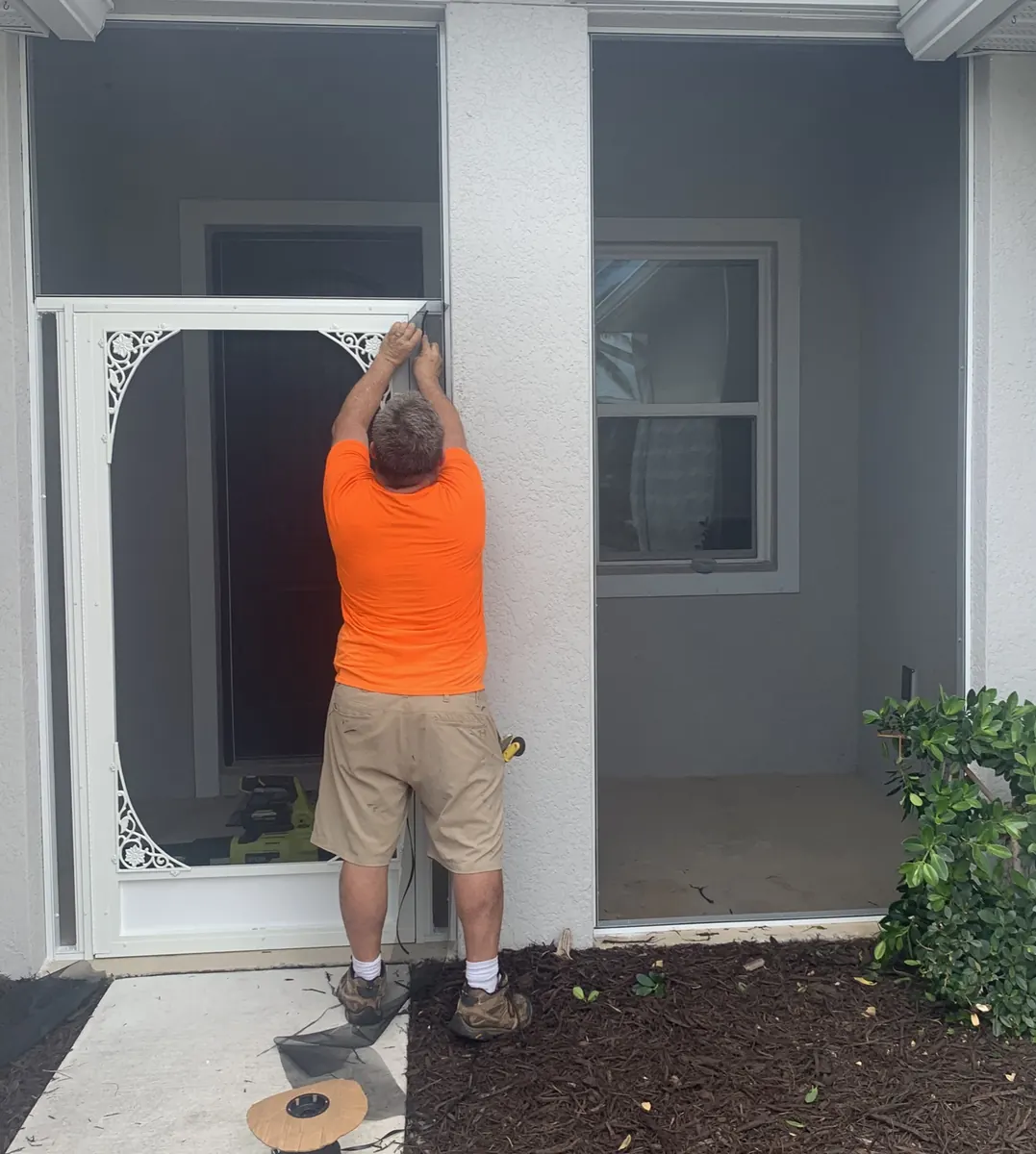
The frame, not just the mesh
Screen is the cheap part of an enclosure. The aluminum frame, the anchors holding it to the slab and the connection where it meets the house are what actually keep the thing standing, and they are what fails expensively if nobody looks at them.
A frame that has moved shows itself in ways homeowners often read as screen problems. Panels that will not hold tension, mesh that pops a corner every few months, a door that has started binding for no obvious reason, a gap opening where the cage meets the fascia. Those are structural symptoms wearing a screen costume.
We assess the frame first on every enclosure we quote, because there is no sense selling you mesh that a moving frame will tear within the year.
- Bent and buckled uprights, beams and chair rails
- Corroded fasteners and pulled slab anchors
- Separation where the enclosure ties into the house
- Out-of-square openings that stop doors closing
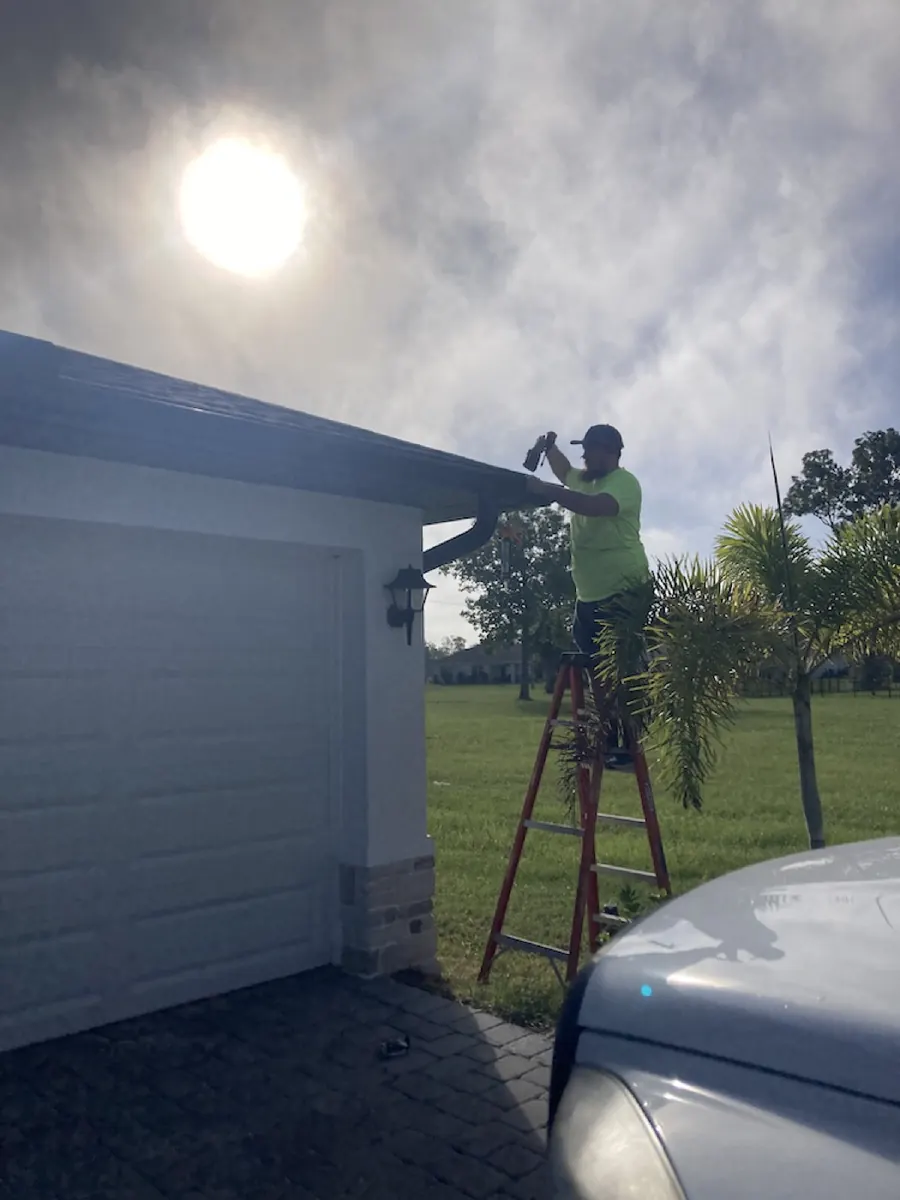
What salt air does to aluminum
Aluminum does not rust the way steel does, but it does corrode, and in coastal Southwest Florida it corrodes at the fasteners first. Every screw is a small point of contact between dissimilar metals, and salt air turns that contact into a slow chemical reaction. The screw head crumbles, the hole opens up, and the member it was holding starts to move.
The other place it shows is at the base, where uprights meet the pool deck or slab. Water sits at that joint, debris holds moisture against it, and the bottom of the upright goes chalky and soft while the rest of the frame still looks fine from six feet away.
Both are repairable if they are caught while it is still a fastener problem rather than a member problem. Left long enough, the fix stops being a screw and starts being a section of frame.

After the storm season
Wind does not usually take an enclosure down all at once. It finds one loose panel, gets underneath it, and works the frame from there. What you are left with after a bad blow is often a mix: some panels gone entirely, some fasteners backed out, one or two members bent, and anchors that have loosened without visibly moving.
We come out and separate that into what is cosmetic, what is structural and what is urgent, and put it in writing so you have something usable for your own decision-making. Where an insurer is involved, a clear written scope of the damage is the document you need in hand.
What we will not do is quote you a full enclosure replacement when the structure is sound and the problem is thirty fasteners and four panels.
- Written scope separating structural from cosmetic damage
- Fastener and anchor replacement across affected runs
- Bent member straightening or section replacement
- Re-screening once the frame is sound again
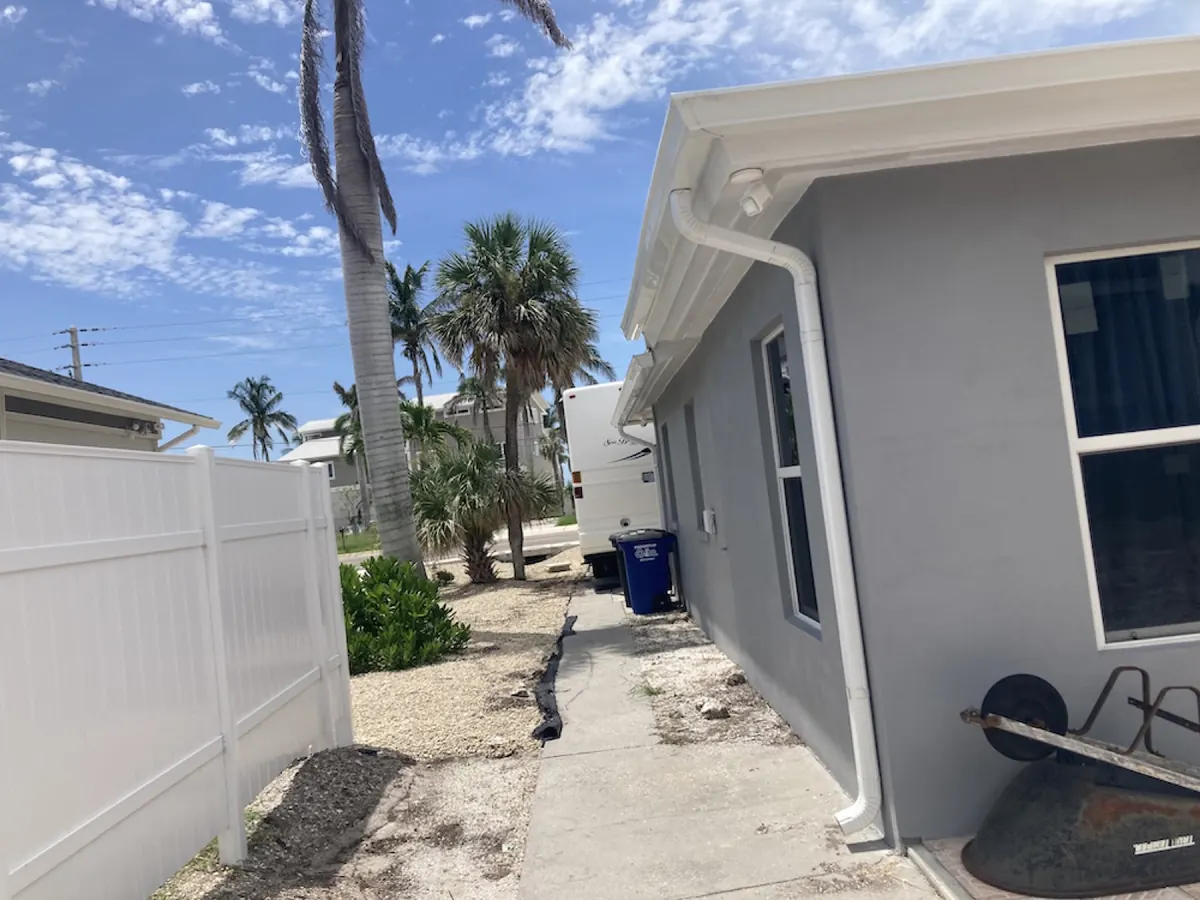
Kick plates, chair rails and the parts that take abuse
The bottom two feet of an enclosure lives a hard life. Pool furniture scrapes it, feet push on it, mowers throw stones at it, and pets treat it as a suggestion. That is what kick plates and chair rails are for, and replacing a dented one is far cheaper than repeatedly re-screening the panel above it.
If your lower panels keep failing, a kick plate is usually the actual answer rather than better mesh. We will fit them where they are missing and swap the ones that have been beaten in, which quietly removes a recurring bill from your year.
As with everything we do, there is no deposit, nothing is due until the work is finished, and the workmanship carries a lifetime guarantee.
What you can expect
Simple from estimate to guarantee.
Free Estimate
We inspect your roofline, recommend the right fix, and hand you a clear written price — no obligation.
Scheduled Service
Our local crew completes the work cleanly and on time, and hauls away anything we remove.
Lifetime Guarantee
Backed by our workmanship guarantee, and you pay nothing until the job is done right.
Good to know
Screen Enclosure Repair questions.
A few tells: panels that will not hold tension no matter how often they are redone, mesh that pops a corner every few months, a door that has started binding, or a visible gap where the enclosure meets the house. Those point at the structure rather than the mesh.
It depends how far it has gone and where the bend sits. Mild deflection in a non-load-bearing member can often be straightened and re-anchored. A buckled upright carrying load gets replaced. We tell you which one you have before we quote.
Salt air. Aluminum resists corrosion but the fasteners are the weak point, and coastal exposure works on them steadily. Once heads start crumbling the holes open up and members begin to move, so it is worth replacing the run rather than the individual screw.
We provide a clear written scope separating structural damage from cosmetic, which is the document that tends to be useful in that process. We are a contractor rather than a public adjuster, so we describe the damage and price the repair.
Always. Fresh mesh tensioned against a frame that is out of square or moving will tear again, and you will have paid for the screen twice. Structure first, screen second.
Yes, and if your lower panels keep failing that is usually the real fix. A kick plate takes the abuse that would otherwise go straight into the mesh, and it costs less than repeatedly re-screening the same panel.
Related reading
- See the full Screens overview for everything we handle in this category.
- Not sure this is the right fit? Get a free, no-obligation estimate and we'll point you to the right service.
- We serve Cape Coral and Fort Myers homeowners for this and every exterior service.
- Florida's summer storm season stresses every roofline — see NOAA's Atlantic hurricane outlook for what's coming.
Contact Us
(239) 342-5489Or, fill out this handy form and we'll get back to you as soon as possible – usually within 24 hours on business days.