
Serving Cape Coral, Fort Myers, Naples, Punta Gorda, Bonita Springs & North Fort Myers — and everywhere in between.
Downspouts that move water away.
A gutter only does half the job. Where the water goes after it leaves the trough is what protects your slab, your beds and your driveway.
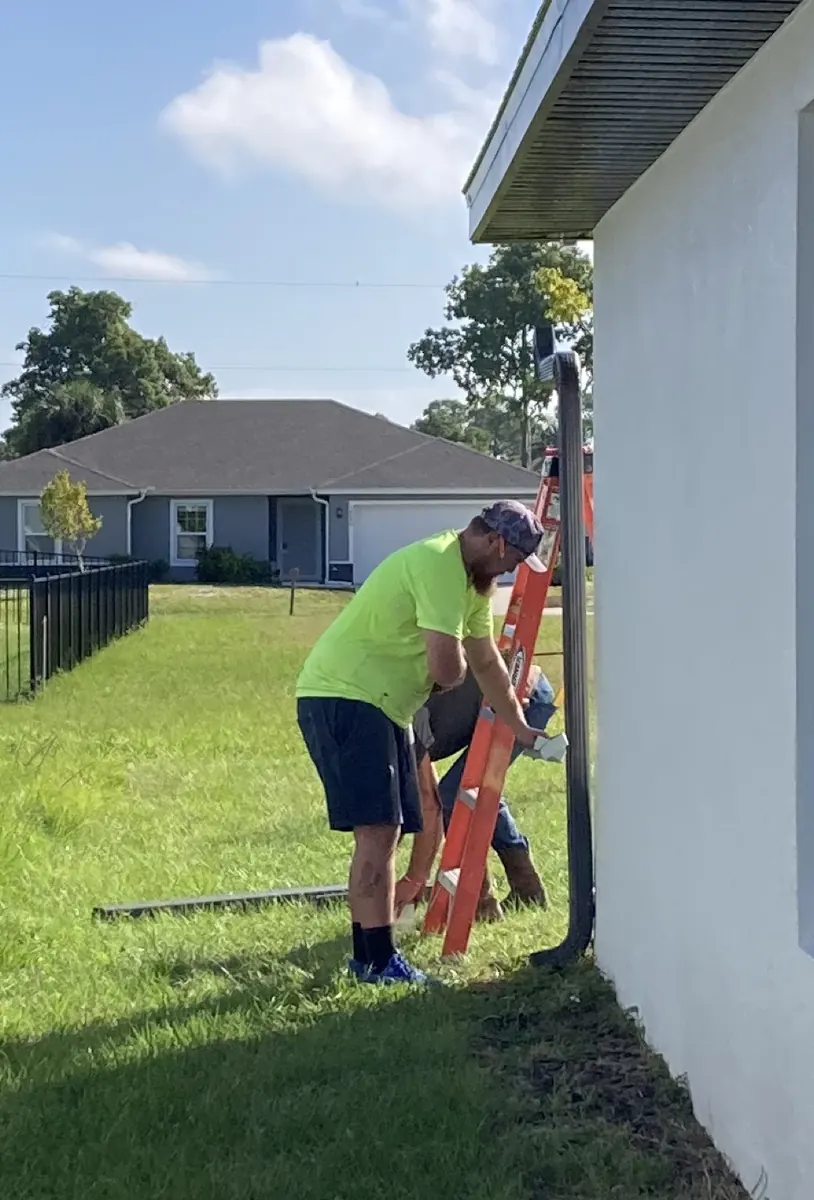
The half of the system nobody looks at
Homeowners judge gutters by the trough, because that is the part you see from the street. The trough is really just a collector. The downspout is what carries the load, and its sizing, placement and discharge point decide whether all that captured water helps you or hurts you.
We install 3x4-inch downspouts as standard rather than the common 2x3. The larger section moves substantially more water and, just as importantly, it is far harder to block with the palm fibre, oak catkins and pine needles that come off Southwest Florida roofs.
Placement gets the same attention. A spout dropped wherever it was convenient for the installer often discharges onto a walkway, into a flower bed that then washes out, or two feet from the slab.
- 3x4 downspouts as standard for real Florida volume
- Placed at corners and low points, not for installer convenience
- Discharge routed clear of walkways and beds
- Extra drops added where a run is carrying too much

Extensions and where the water ends up
A downspout that ends at the wall has simply moved your roof water from a wide area to a concentrated one right at the foundation. In sandy Southwest Florida soil that carves a channel, undermines pavers and keeps the slab edge permanently damp.
Extensions solve it cheaply. Above-ground extensions and splash blocks push discharge out past the drip line, hinged extensions swing up when you need to mow, and underground runs take the water properly away to a discharge point where it can soak or drain without bothering anything.
Which one is right depends on your lot, your grade and how much you care about the look. We will tell you what the site needs rather than defaulting to the option with the biggest ticket.
Buried drains that stopped draining
Plenty of homes here have underground drain lines from the downspouts, and a good number of them have quietly stopped working. Roots find the joints, silt settles in the low spots, and the discharge end gets buried or crushed by landscaping. The system looks intact and is doing nothing.
The tell is water surging back up out of the inlet during heavy rain, or a downspout that overflows at the elbow while the trough above it is clean. If you have been told your gutters are the problem and cleaning has not helped, the buried line is where to look next.
We clear blocked underground runs, replace collapsed sections, and where a line is beyond saving we will say so instead of charging you to keep flushing it.
- Blocked underground runs cleared
- Collapsed and root-damaged sections replaced
- Buried or crushed discharge ends located and re-opened
- Honest advice when a line is past repair
Getting the count right
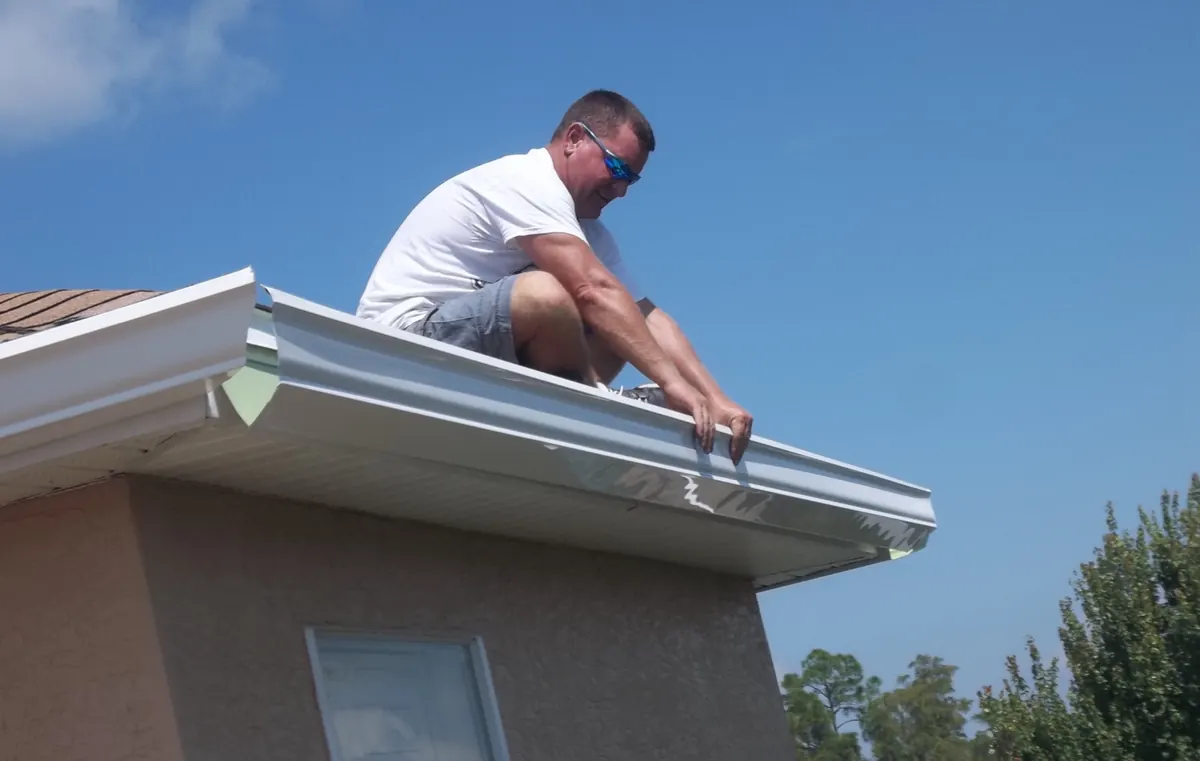
One downspout on a long run is a common shortcut and a reliable source of overflow. Water has to travel the whole length of the trough to reach the single outlet, and in a heavy burst it arrives faster than the outlet can take it, so it goes over the edge at the far end.
Adding a drop is usually inexpensive, especially while a crew is already on site, and it fixes overflow that no amount of cleaning will touch. Valleys are the other place to watch, since a valley concentrates a large roof area into a few feet of gutter.
Estimates are free, there is no deposit, and nothing is due until the work is finished and you are happy with it.
What you can expect
Simple from estimate to guarantee.
Free Estimate
We inspect your roofline, recommend the right fix, and hand you a clear written price — no obligation.
Scheduled Service
Our local crew completes the work cleanly and on time, and hauls away anything we remove.
Lifetime Guarantee
Backed by our workmanship guarantee, and you pay nothing until the job is done right.
Good to know
Downspouts & Drainage questions.
Usually too few downspouts, a blocked underground line, or lost pitch. Water has to reach an outlet, and on a long run with a single drop it can arrive faster than that outlet can take it. Adding a drop often fixes what cleaning cannot.
Far enough that the water is past the drip line and moving away on the grade, rather than soaking in at the slab edge. In sandy soil a discharge right at the wall will carve a channel and keep the foundation edge damp.
Yes. Above-ground extensions and splash blocks are the simple fix, hinged extensions let you mow underneath, and underground runs move the water away entirely. We will recommend based on your grade and lot rather than defaulting to the priciest option.
In most cases. We clear blocked runs and replace collapsed or root-damaged sections. Where a line is genuinely past saving we will tell you that rather than charging you to keep flushing something that will block again.
Volume and clog resistance. The larger section carries far more water and is much harder for palm fibre, oak catkins and pine needles to bridge. In a climate where rain arrives in short heavy bursts, the extra capacity is doing real work.
Yes. Adding drops, re-routing discharge and correcting extensions on an existing system are all normal jobs for us, and they are often the cheapest meaningful improvement you can make to gutters that already exist.
Related reading
- See the full Gutters overview for everything we handle in this category.
- Not sure this is the right fit? Get a free, no-obligation estimate and we'll point you to the right service.
- We serve Cape Coral and Fort Myers homeowners for this and every exterior service.
- Florida's summer storm season stresses every roofline — see NOAA's Atlantic hurricane outlook for what's coming.
Contact Us
(239) 342-5489Or, fill out this handy form and we'll get back to you as soon as possible – usually within 24 hours on business days.