(239) 342-5489 info@wwjdguttersofflorida.com
Home  /  Soffit & Fascia

Soffit and fascia repair in SW Florida.

The finished edge of your roof is also its weakest point. When soffit and fascia fail, water, heat and wildlife get into the attic, and the bill grows every month you wait.

Roofline showing soffit and fascia on a Southwest Florida home

What these two parts actually do

Fascia is the vertical board running along the ends of your roof rafters, the one your gutters are screwed into. Soffit is the horizontal underside panel that closes the gap between that board and the wall of the house.

Between them they do three jobs. They keep wind-driven rain out of the roof structure, they let the attic breathe through vented soffit panels, and they close off the gap that squirrels, rats, wasps and birds would otherwise treat as a front door. When either one fails, all three jobs stop at once.

  • Weather seal at the most exposed edge of the roof
  • Attic intake ventilation through the soffit vents
  • Physical barrier against pests and nesting
  • Structural backing your gutters depend on
Water staining along a roofline eave in Southwest Florida

How Florida finds the weak spot

Almost every failure we open up starts with water that was not going where it should. An overflowing gutter dumps behind the fascia instead of into the downspout. A missing gutter lets roof runoff sheet straight down the board. Wind-driven rain in a summer storm finds a seam and gets behind the wrap.

From there it is quiet for a while. Timber fascia holds moisture, softens, and stops gripping fasteners, so the gutter starts pulling away, which lets more water in behind it. By the time a homeowner notices sagging gutters or a stain on the soffit, the board behind has often been wet for a couple of seasons.

Because we are a gutter company, we see the cause and the symptom together, and we fix the drainage rather than just the wood.

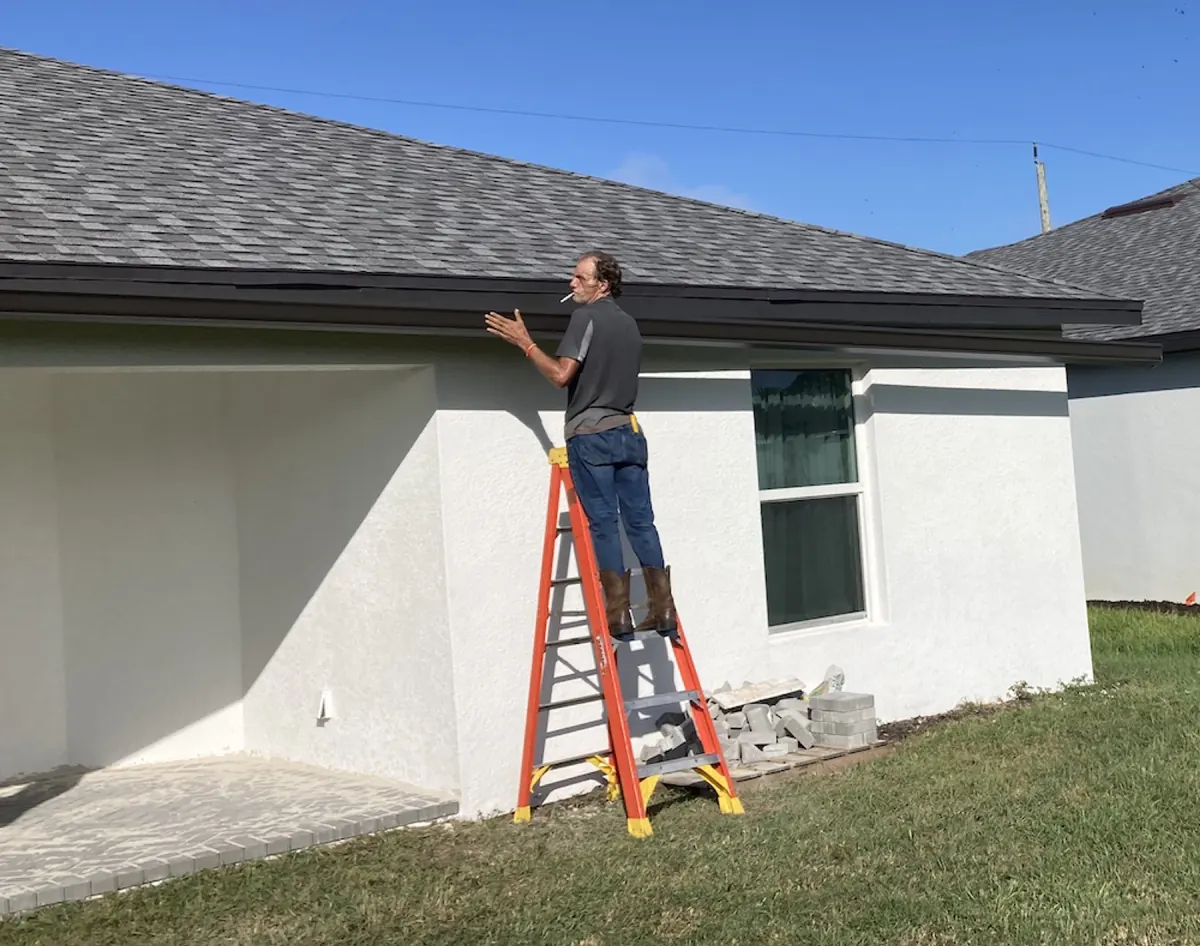
WWJD crew working along an eave line before a gutter install

Do it with the gutters, not after

Gutters hang off the fascia. That means any fascia repair after a gutter installation involves taking the new gutters back down, which is time you pay for twice.

The sensible order is to check and repair the fascia while the old gutters are already off, then hang the new system on sound backing. When we quote a gutter replacement we look at the board behind it as a matter of course, and we tell you if it needs work rather than screwing a new system into soft timber and calling it done.

If the fascia is fine, we will say so. Nobody needs to be sold roofline work they do not have.

WWJD crew working along a Southwest Florida roofline
Local crew. Whole exterior covered.
Why homeowners call us

Straight answers, no deposit, guaranteed work.

We beat any written price

Bring us a competitor's written quote and we will beat it, on the same scope of work.

Licensed & insured to $2M

A certified residential contractor serving Lee, Charlotte and Collier counties since 2007.

No deposit, 24-hour response

You pay nothing until the work is finished and you are satisfied with it.

Good to know

Soffit & Fascia questions.

Fascia is the vertical board that runs along the edge of your roofline, and it is the board your gutters actually screw into — a structural piece as much as a finishing one. Soffit is the horizontal panel underneath it, closing the gap between that fascia board and the wall so the underside of your roof overhang is not just open framing. The two take very different kinds of stress: fascia takes direct weather exposure plus the full weight of a gutter system full of water, which is why it needs to be sturdy enough to hold a fastener under load. Soffit's main job is ventilation and keeping pests out rather than carrying weight, which is why it is typically vented aluminum rather than solid board. When one fails it often affects the other, since they share the same roofline and water exposure, which is why we usually look at both together rather than quoting them in isolation.

A few reliable signs: gutters that are visibly pulling away from the house or sagging at one end, dark staining running down the face of the board, paint that is bubbling or peeling in one particular stretch rather than evenly across the whole run, and, the most direct test, soft spots if you press on the board with your thumb or a screwdriver handle. If a gutter has been overflowing at one corner for a while, that is usually the first place to look, since standing water and constant splash-back is exactly what rots fascia from the back side where you cannot see it happening. Paint can look intact right up until the wood underneath has fully failed, because paint holds its shape over softened timber for a surprisingly long time. If you are not sure what you are looking at, we will come take a look and press the board ourselves rather than guessing from a photo.

In most cases, yes. Both soffit and fascia sit at the edge of the roof structure rather than being part of the roof deck itself, so they can typically be accessed and worked on entirely from outside, without opening up or disturbing the shingles or tile above them. If the damage has stayed contained to the fascia board and the soffit panels, that is a straightforward exterior repair we handle regularly. Where it gets more involved is if the rot or water damage has travelled further up into the roof decking or the rafter tails themselves — at that point it crosses into roofing work, which is outside what we do, and we will tell you plainly rather than trying to cover it over with new trim and hoping nobody notices later.

Almost always, yes, especially in this climate. Vented soffit is the intake side of your attic's ventilation system — hot air leaves through ridge or roof vents up top, and it needs replacement air coming in from somewhere lower, which is exactly what your soffit is supposed to provide. Without adequate intake, the attic runs significantly hotter than it should, that heat pushes down into the living space below and drives up your cooling costs, and moisture that would otherwise vent out instead has nowhere to go and can condense on the underside of the roof deck over time. Solid panels do have a legitimate place in specific spots, such as short returns or areas over unconditioned space, but they should not be used across a whole run just because it is simpler to install. We size the vented panel run to what your eave actually needs.

Closing the gaps in a failing or missing soffit removes the easy entry point that squirrels, rats and birds most commonly use to get into an attic along the roofline — a surprisingly small opening is all a rat or squirrel needs, and birds will work a loose panel edge wider over time. New panels, properly channelled at both edges and fastened at the correct spacing, take that opening away entirely. One important sequencing note, though: if something is already living in your attic right now, it needs to be removed first before any new soffit goes up. Sealing an animal inside the attic creates a worse and more expensive problem than the one you started with, and we will always flag that and recommend removal first rather than closing up an active nest.

That is the way we generally prefer to do it, and it is often the cheaper path for you too. Gutters hang directly off the fascia board, so repairing or replacing that board while the old gutters are already down avoids paying to remove a brand-new gutter system a second time just to get at rotted wood behind it. It also means the access and staging costs, ladders and getting the crew up on the roofline, only get paid for once instead of twice across two separate visits. When we quote a gutter replacement, checking the fascia is part of that estimate from the start, so if repair work is needed you will see it priced alongside the gutters rather than discovering it as a surprise add-on partway through the job.

Related reading

Contact Us

(239) 342-5489

Or, fill out this handy form and we'll get back to you as soon as possible – usually within 24 hours on business days.

Call Now Free Estimate