
Source: Bob Vila, pool screen enclosure cost (Angi, HomeAdvisor, Fixr and HomeGuide data), updated May 31, 2024.
A pool screen enclosure costs about $5,708 to $16,608, with a national average of about $10,675, according to Bob Vila's cost guide. Screen enclosures are the cheapest way to enclose a pool, at roughly $8 to $15 per square foot against $30 to $75 for glass. In Southwest Florida the real number depends on the footprint, the height, the roof style, the screen you choose and the engineering a cage needs to meet the Florida Building Code's wind loads.
This guide explains what moves the price of a pool cage or screened patio here, what a permit involves, the questions to ask when comparing quotes, and whether an enclosure is worth it. If you are ready to talk about your own space, our screen enclosures page covers what we build.
Contents
- Pool enclosure cost by type
- How the roof style changes the price
- What else moves the number
- Permits and wind engineering in Southwest Florida
- New enclosure or a re-screen?
- Are pool screen enclosures worth it?
- What goes into a quote from us
- Pool screen enclosure cost FAQ
Pool enclosure cost by type
"Pool enclosure" covers several very different structures. Bob Vila's guide gives these national ranges:
| Enclosure type | National cost |
|---|---|
| Screen (aluminum frame, mesh panels) | $8–$15 per sq ft |
| Polycarbonate | $20–$200 per sq ft |
| Glass | $30–$75 per sq ft |
| Retractable | $20,000–$200,000 total |
Source: Bob Vila, updated May 31, 2024. National figures; Florida labor and engineering vary.
Most pool enclosures you see in Southwest Florida are the first kind: an aluminum frame with screen panels on the walls and roof. That is what this guide prices. Glass and retractable systems are a different project with a different budget.
How the roof style changes the price
The biggest choice is the roof. A pool cage usually has its own screened roof. A lanai or screened porch usually sits under the house roof, so only the walls need screening, which is why a 12x12 patio screened in under an existing roof costs a fraction of a full pool cage.
Free-standing cages come in a few common shapes, and Bob Vila lists these national ranges for them:
| Roof style | What it looks like | National range |
|---|---|---|
| Gable | Peaked roof that follows the house lines | $8,000–$30,000 |
| Hip | Slopes on all sides, like a hip roof | $10,000–$30,000 |
| Mansard | Sloped sides with a flat top, the most common pool cage | $10,000–$50,000 |
| Under-roof lanai or porch | Walls only, no screen roof | Least of all; no roof framing |
Source for the ranges: Bob Vila, updated May 31, 2024.
A dome roof curves up to a high center and gives a pool a more open feel. Two-story cages and picture-window panels, which leave a wide opening with no horizontal bar across your view, add cost on any style.
What else moves the number
Footprint and wall height
Screen enclosures are priced on their size, and height counts as much as footprint. A taller wall means larger panels and heavier framing to carry the wind load.
Doors, kick plates and chair rails
Every door adds a frame, hardware and a self-closer. Kick plates on the lower run keep furniture and feet from going through the screen, and chair rails add a horizontal brace at seat height. Each is a line item.
Screen mesh
Standard 18x14 fiberglass mesh keeps mosquitoes out and is the everyday choice. Near canals, mangroves and preserves, tighter 20x20 no-see-um mesh is worth the extra cost. Pet-grade mesh stands up to dogs on the lower panels, and solar screen takes the edge off a west-facing deck. You can mix them on one enclosure.
The connection to the house
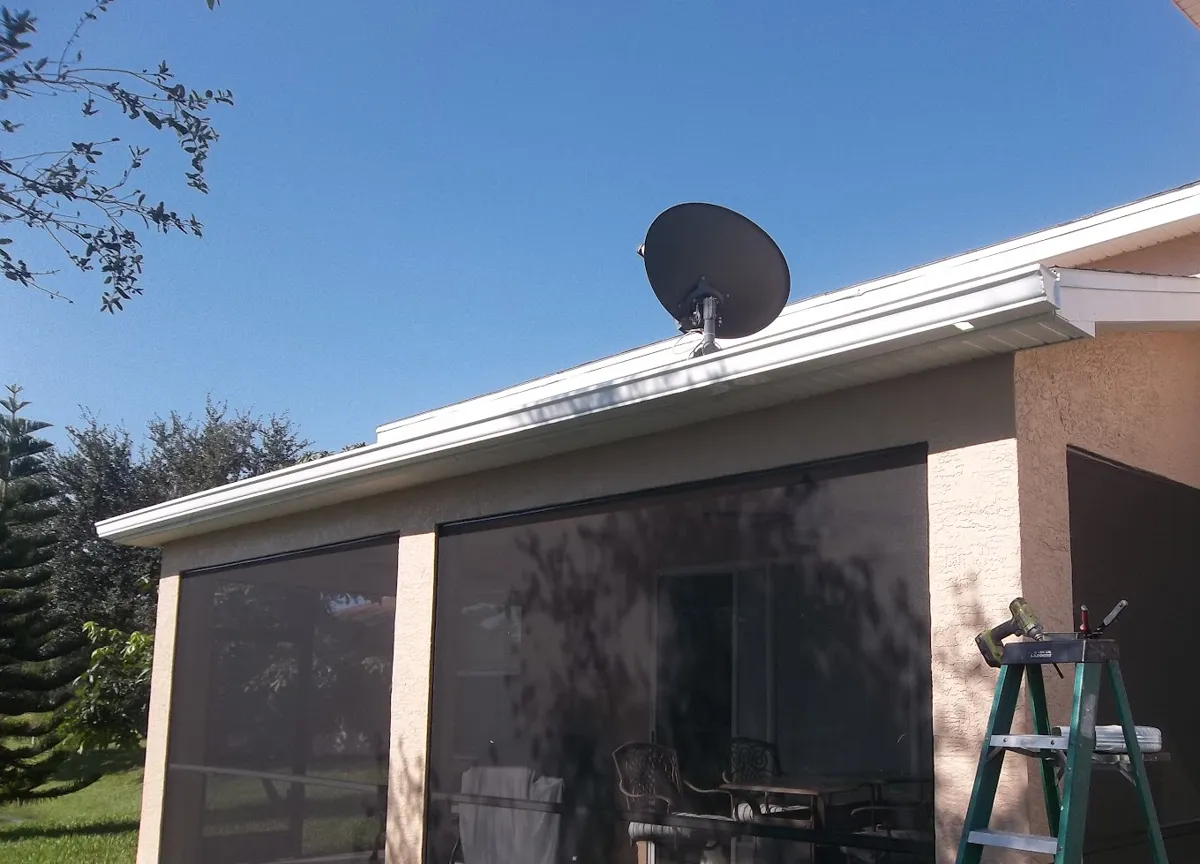
Most enclosures attach at the fascia and carry roof water through a super gutter, the oversized trough where the cage meets the house. If the fascia is soft, it has to be repaired before a cage is fastened to it. If the super gutter is undersized for the water it takes, it will overflow behind the cage.
Slab and footings
The frame has to be anchored to a slab or footing that can hold it. An existing pool deck may be enough, or it may need new footings at the posts.
Permits and wind engineering in Southwest Florida
A new or replacement screen enclosure is permitted work in Florida. It has to meet the wind-load requirements of the Florida Building Code, which is why the aluminum sizes, spacing and anchoring come from engineered drawings rather than by eye.
Each county and city runs its own permit desk. As one example, Collier County's aluminum structures permit requirements call for construction plans showing the scope of work, signed and sealed where applicable, and a certified site plan when the project adds more than 400 square feet of new impervious area. Bob Vila puts typical permit fees at $30 to $325 nationally, with timelines that can stretch out.
Hurricane Ian in 2022 took down or twisted thousands of pool cages across Lee and Charlotte counties, and a lot of the enclosures going up now are replacements for homeowners who lost one. When you compare quotes, check three things on each one: that it covers the permit, that it covers the engineering, and how the frame will be anchored.
New enclosure or a re-screen?
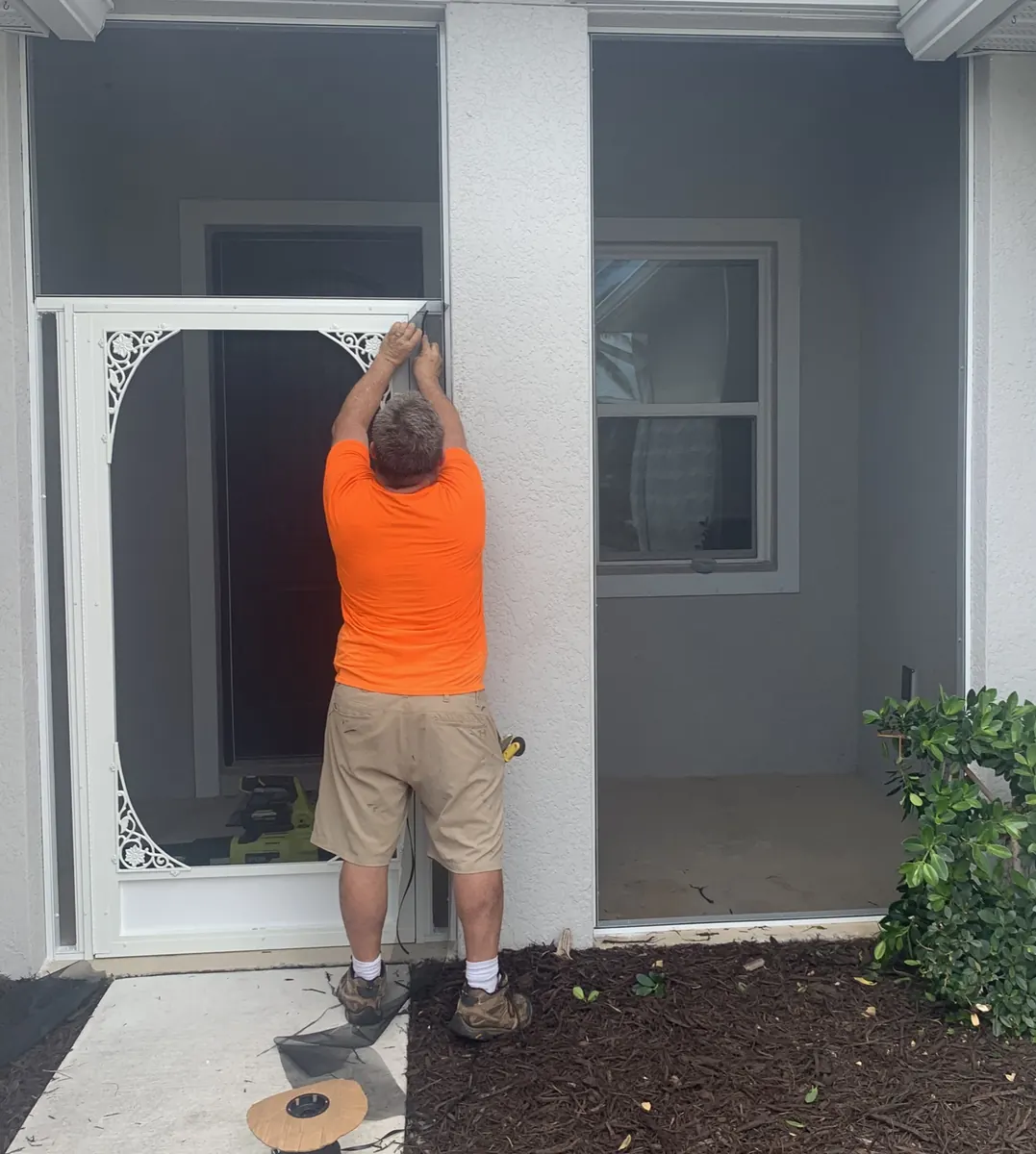
Not every tired cage needs replacing. If the aluminum is sound and only the screen has gone chalky, torn or loose, a re-screen costs far less than a new structure. Replacement is the right call when the frame has corroded at the base, members are bent beyond straightening, or a storm has racked the whole structure out of square. Our pool cage rescreening page explains how we handle a cage that only needs new mesh.
Are pool screen enclosures worth it?
For most homes here, yes. An enclosure keeps leaves, palm debris and insects out of the pool, cuts down on cleaning, and makes the deck usable in the evening when the mosquitoes and no-see-ums come out. In Southwest Florida it is less a luxury than the thing that makes the back of the house livable from March to November.
It also adds a barrier around the pool, though it does not replace a dedicated pool safety fence where one is required. The trade-offs are upkeep and storms: screens age in the sun and need replacing over the life of the frame, and a cage is a large structure that has to be built for the wind.
What goes into a quote from us
Any price you see online without someone measuring your space is a guess, so we do not publish one. Here is what a screen enclosure estimate from WWJD Gutters covers:
- A free written price. We measure on site and put the scope in writing: footprint, height, roof style, doors, kick plates and mesh.
- The fascia and super gutter checked. We are a gutter company first, so we check the fascia the enclosure will hang from and the trough that carries roof water past it.
- No deposit. Every enclosure is built with no deposit and a lifetime workmanship guarantee.
- We beat written quotes. If you already have a written quote from another contractor for the same scope, we will beat it.
WWJD Gutters has been family-owned since 2007 and is licensed and insured to $2 million. We build and replace enclosures in Cape Coral, Fort Myers, North Fort Myers, Punta Gorda, Bonita Springs and Naples. To price a pool cage or screened patio for your own home, request a free estimate.
Pool screen enclosure cost FAQ
How much does a pool screen enclosure cost?
Bob Vila's cost guide puts pool screen enclosures at about $5,708 to $16,608, with a national average of about $10,675, or roughly $8 to $15 per square foot. Footprint, height, roof style, doors, mesh and engineering move a Southwest Florida price.
Are pool screen enclosures worth it?
For most Southwest Florida homes, yes. An enclosure keeps leaves, palm debris and insects out of the pool, cuts down on cleaning and makes the deck usable in the evening. It does not replace a pool safety fence where one is required.
How much does it cost to screen in a 12x12 patio?
Far less than a pool cage, because a patio under an existing roof needs walls only and no screen roof. The final price depends on wall height, doors and mesh, so it should be measured and priced in writing.
How much does a 20x20 screened-in porch cost?
A 20x20 porch with its own screen roof is a mid-size job, and one under the house roof costs less. National screen enclosure prices run about $8 to $15 per square foot, per Bob Vila, before doors, kick plates and engineering.
Do I need a permit for a pool screen enclosure in Florida?
Yes. A new or replacement screen enclosure is permitted work and has to meet the Florida Building Code's wind-load requirements. Collier County, for example, asks for plans showing the scope of work and a site plan.
Should I re-screen my pool cage or replace it?
If the aluminum frame is sound and only the mesh has failed, a re-screen costs far less. Replace it when the frame has corroded at the base, members are bent, or a storm has racked the structure out of square.