
Serving Cape Coral, Fort Myers, Naples, Punta Gorda, Bonita Springs & North Fort Myers — and everywhere in between.
Siding replacement done from the wall out.
When patching has run its course, replacing an elevation is the moment to check what is behind the panels and put the details right for good.
When replacement is the right call
There is a point where repair stops being economical. Usually it arrives when the material has gone brittle across a whole elevation, so every repair cracks the panels next to it, or when the number of mismatched replacement panels has made the wall look worse than the damage did.
The other trigger is what is behind the panels. If water has been getting in for a while and the sheathing or the weather barrier is compromised, patching the outside is decorating over a problem that keeps growing.
We will give you the straight assessment. Plenty of walls we look at need three panels and a corner post, and we say so.
- Material brittle across a whole elevation
- Too many mismatched panels to look right
- Suspected damage to sheathing or barrier
- Storm damage spanning multiple runs
What we find when the panels come off
This is the real value of replacement over patching: for a few hours the wall is open and everything is visible. We check the sheathing for soft spots and staining, look at whether the weather barrier is intact and correctly lapped, and inspect the framing at window openings where water tends to collect.
It is common to find a barrier that was never lapped properly over the flashing, or one that has torn and been quietly channelling water into the wall for years. Fixing that costs very little while the wall is open and is effectively impossible afterwards.
Anything we find gets shown to you before it is covered up, with a price. Nobody should be told after the fact that there was rot behind their new siding.
Details that decide how long it lasts
Most siding failures we see are installation failures rather than material failures. Vinyl has to be hung, not pinned: fasteners centred in the slots, driven to leave a little play, and the panel left free to slide as it heats and cools. Ends need expansion clearance where they enter the channels, more in cool weather than warm, because that panel is going to grow on the first hot afternoon.
Then there is the water management. Flashing over openings, barrier lapped so water runs outward at every junction, starter strip level and secure so wind cannot get under the bottom course, and a drainage path that lets anything getting behind the panels escape at the base.
None of it is exotic. It is just the difference between siding that looks right in ten years and siding that is buckled and rattling in three.
- Fasteners centred and left with movement
- Correct expansion gaps at panel ends
- Flashing and barrier lapped to shed outward
- Drainage path kept open at the base of the wall
Doing it alongside the roofline
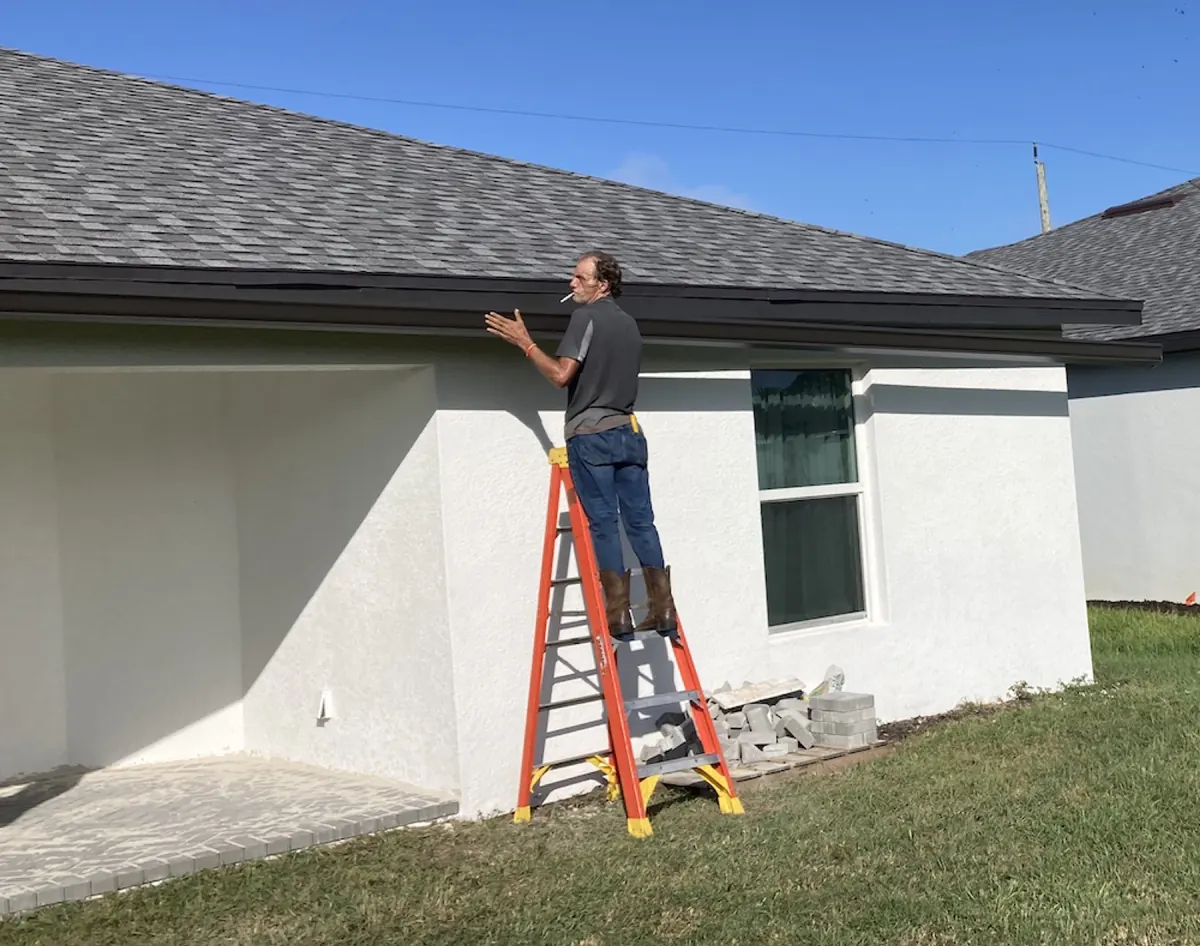
Siding meets the roofline at the top, which is exactly where gutters, fascia and soffit live. If any of those need work, doing it while the siding is off is far cheaper than coming back to it, because the access is already there and the transition detail only gets built once.
That is the most common bundle we do: new siding on an elevation, fascia repaired behind the gutter line, and the gutter re-hung on sound material with the discharge pointed away from the wall we have just finished. One scope, one crew, one guarantee.
There is no deposit, nothing is due until the work is complete and you are satisfied, and the workmanship carries our lifetime guarantee. If you have a written quote for the same scope, bring it and we will beat it.
What you can expect
Simple from estimate to guarantee.
Free Estimate
We inspect your roofline, recommend the right fix, and hand you a clear written price — no obligation.
Scheduled Service
Our local crew completes the work cleanly and on time, and hauls away anything we remove.
Lifetime Guarantee
Backed by our workmanship guarantee, and you pay nothing until the job is done right.
Good to know
Siding Replacement questions.
The usual signs are material that has gone brittle across a whole elevation so repairs crack their neighbours, so many mismatched panels that the wall looks patchworked, or evidence that water has been getting behind the siding. We give you that assessment plainly.
Yes, and it is the main reason replacement is worth more than patching. With the wall open we check sheathing for soft spots, confirm the weather barrier is intact and lapped correctly, and look at framing around window openings. Anything we find is shown to you with a price before it gets covered.
Yes, and it is common where storm damage or exposure has hit one side hardest. The consideration is appearance, since a new elevation next to three weathered ones will read differently for a while.
Because vinyl grows and shrinks with temperature, significantly, every day. Panels need clearance where they enter the channels or they buckle on the first hot afternoon. How much clearance depends on the temperature on installation day.
It depends on the size of the elevation and what we find behind the panels. A single wall is typically a short job, a whole house is a multi-day one, and any sheathing or barrier repair adds time. You get a realistic schedule in writing.
If they need work, yes. Siding meets the roofline exactly where the gutters and fascia live, so handling them together means the access is paid for once and the transition detail is built once rather than twice.
Related reading
- See the full Siding overview for everything we handle in this category.
- Not sure this is the right fit? Get a free, no-obligation estimate and we'll point you to the right service.
- We serve Cape Coral and Fort Myers homeowners for this and every exterior service.
- Florida's summer storm season stresses every roofline — see NOAA's Atlantic hurricane outlook for what's coming.
Contact Us
(239) 342-5489Or, fill out this handy form and we'll get back to you as soon as possible – usually within 24 hours on business days.