
Serving Cape Coral, Fort Myers, Naples, Punta Gorda, Bonita Springs & North Fort Myers — and everywhere in between.
Siding repair, panel by panel.
A cracked panel, a run that rattles in the wind, a corner post that has pulled away. Small siding problems are cheap to fix and expensive to ignore.
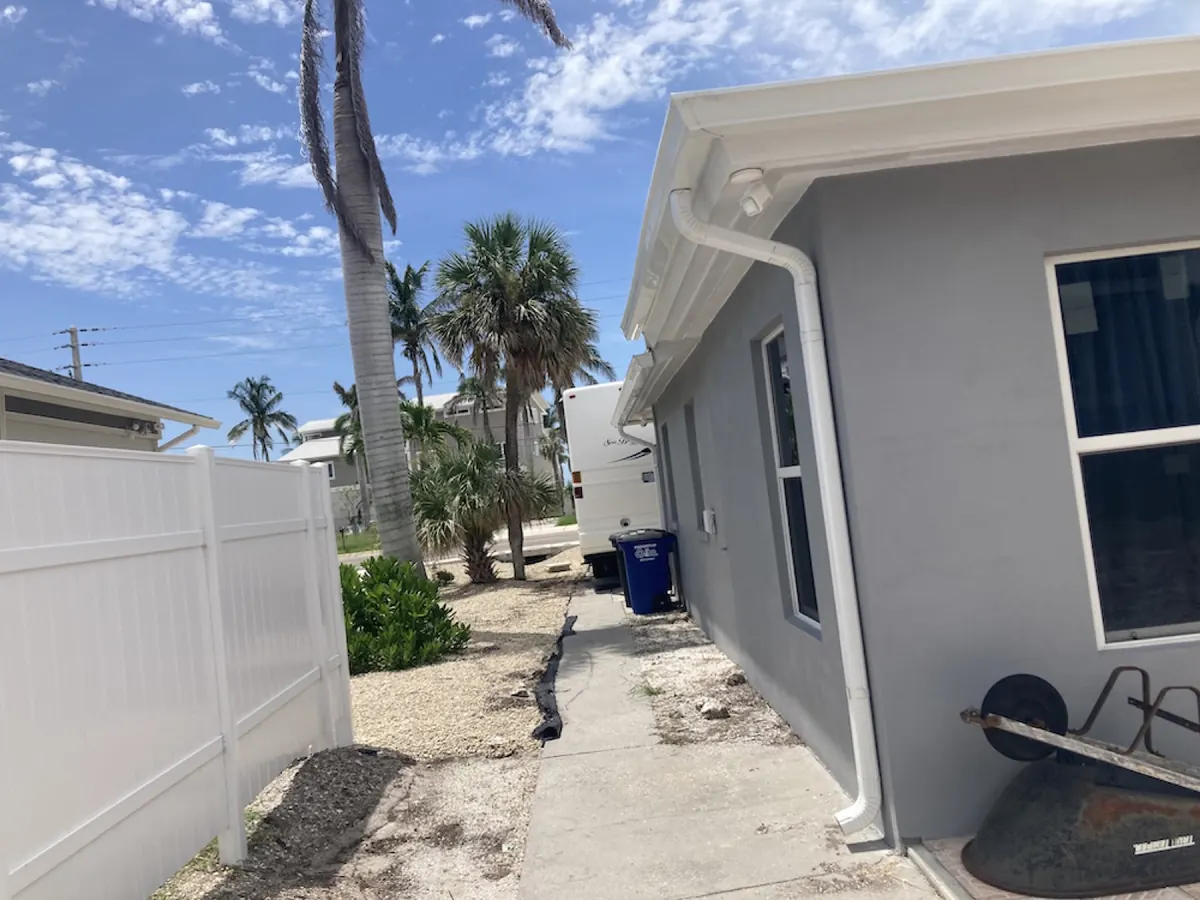
Swapping a damaged panel
Vinyl siding locks together course by course, which means a damaged panel low on a wall can be replaced without stripping everything above it. The panels above get unlocked with a zip tool, the failed one comes out, the new one goes in, and the wall goes back together.
Done properly it is a tidy job. Done impatiently it cracks two more panels on the way, which is why brittle older siding needs a careful hand and a warmer part of the day when the material has some flex in it.
Aluminum panels work differently and are often face-nailed, so replacement is a different technique, but the principle holds: a localised repair is usually possible.
- Individual panels unlocked and replaced
- Careful handling of older, brittle vinyl
- Aluminum panel replacement and re-fastening
- Surrounding courses re-locked and checked
Loose runs and rattling in the wind
Siding that clatters in a breeze is telling you the fasteners have lost their hold or the nail slots have elongated from years of thermal movement. Left alone, the next real wind event lifts that section and takes it off the wall, usually along with the courses locked into it.
Re-securing is straightforward and inexpensive compared to what a lifted run costs, and there is a technique to it. Fasteners go in the centre of the slot and are not driven fully home, because vinyl has to be able to slide as it expands. Nailing it tight is precisely what caused most of the buckling we get called about.
Where slots have torn through completely, that panel gets replaced rather than re-nailed into damaged material.
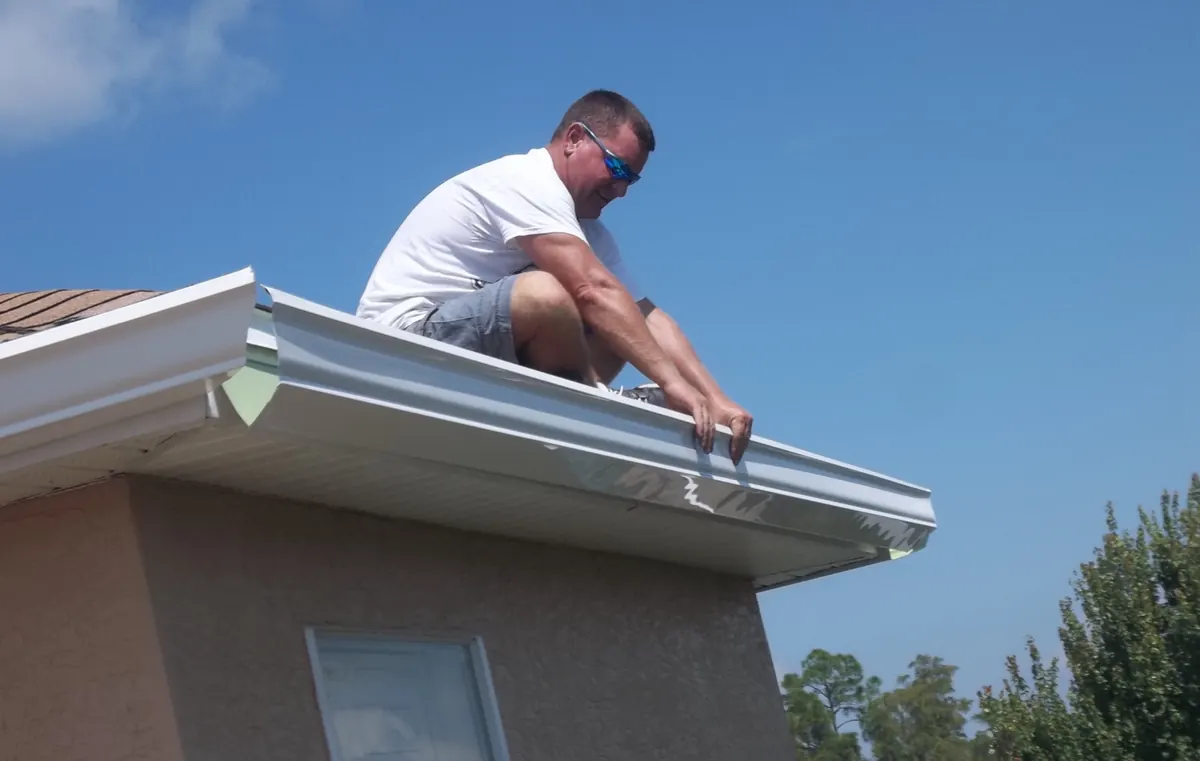
Trim, corners and J-channel
The accessories fail before the field panels do, and they are where water gets in. J-channel around windows and doors, corner posts, starter strip at the bottom and the trim where siding meets the roofline all take direct weather and hold the whole system together.
Cracked J-channel funnels water behind the panels instead of shedding it outward. A corner post pulling away opens a vertical gap the length of the wall. A starter strip that has come loose lets wind get under the bottom course, which is how a whole elevation unzips in a storm.
These are small parts and small costs, and they are the highest-value siding repairs there are.
- J-channel replaced around windows and doors
- Corner posts re-secured or renewed
- Starter strip re-fixed so wind cannot get under
- Roofline transitions sealed correctly
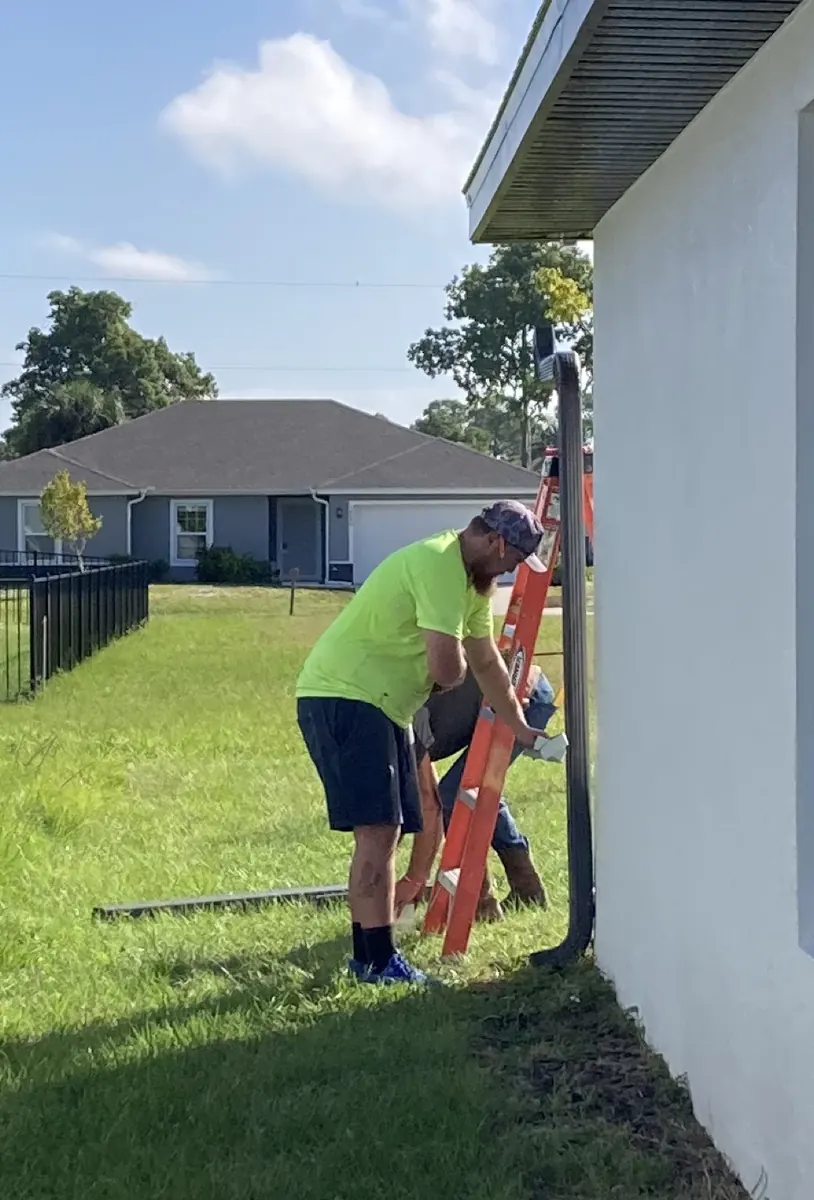
Checking what put the water there
Siding damage clusters in predictable places, and a striking number of those places are directly below a gutter problem or beside a downspout that discharges against the wall. Constant splash-back at the bottom course, or a sheet of roof runoff hitting one section every storm, is a much harder test than the weather alone.
Because gutters are our main trade, we look up as well as at the wall. If the cause is a missing run, a blocked spout or a discharge point too close to the house, we can fix that in the same visit and stop paying to repair the same panel every few years.
Estimates are free, there is no deposit, and nothing is due until the work is done and you are happy with it.
What you can expect
Simple from estimate to guarantee.
Free Estimate
We inspect your roofline, recommend the right fix, and hand you a clear written price — no obligation.
Scheduled Service
Our local crew completes the work cleanly and on time, and hauls away anything we remove.
Lifetime Guarantee
Backed by our workmanship guarantee, and you pay nothing until the job is done right.
Good to know
Siding Repair questions.
Usually yes. Vinyl locks course by course, so panels above the damaged one are unlocked with a zip tool, the failed panel is swapped, and the wall is re-locked. Older brittle vinyl needs a careful hand so the repair does not crack its neighbours.
It is worth acting on. Rattling means fasteners have lost their grip or the nail slots have elongated, and the next strong wind can lift that section off the wall along with everything locked into it. Re-securing is cheap by comparison.
Nearly always because it was nailed too tight. Vinyl expands and contracts daily in this heat and has to be able to slide on the fastener. Pinned panels cannot move, so they distort. We fasten in the centre of the slot and leave the panel free to move.
It is the trim that receives panel ends around windows, doors and rooflines. When it cracks or pulls loose it stops shedding water outward and starts funnelling it behind the siding, which is how wall damage begins from a very cheap part.
Yes. That usually means replacing impacted panels, re-securing runs that lifted, and renewing trim and corner posts that took the wind. We will also check the barrier behind any section we have off.
As closely as available stock allows. Profiles get discontinued and existing panels have faded in the sun, so a close match is realistic. Taking panels from a hidden elevation to patch a visible wall, and putting the new stock out of sight, often gives the best result.
Related reading
- See the full Siding overview for everything we handle in this category.
- Not sure this is the right fit? Get a free, no-obligation estimate and we'll point you to the right service.
- We serve Cape Coral and Fort Myers homeowners for this and every exterior service.
- Florida's summer storm season stresses every roofline — see NOAA's Atlantic hurricane outlook for what's coming.
Contact Us
(239) 342-5489Or, fill out this handy form and we'll get back to you as soon as possible – usually within 24 hours on business days.