
Source: This Old House, best gutter guards of 2026, updated October 8, 2026.
The best gutter guards for a Southwest Florida home are fine micro-mesh guards, ideally stainless steel, fastened to the gutter so storm wind cannot lift them. They stop the pine needles and palm debris that slip through cheaper screens, and in testing they overflowed the least in heavy rain. Brush and foam inserts are cheap and easy, but they clog and break down within a few years in our sun and rain.
This guide compares every common type of gutter guard side by side, explains what "best" means on a house in Lee, Charlotte or Collier County, and shows how to choose for your own roof and trees. If you would rather talk it through with someone who installs them, our gutter guards page explains what we fit and how.
Contents
- What "best" means in Southwest Florida
- Gutter guard types compared
- Why micro-mesh comes out on top
- Screens, reverse-curve, brush and foam
- The downsides of any gutter guard
- How to choose for your house
- What we install, and why
- Best gutter guards FAQ
What "best" means in Southwest Florida
Most "best gutter guard" lists are written for houses up north, where the test is maple leaves in the fall and ice in the winter. A guard that wins there can lose here, because our gutters face three different problems.
Small, sharp debris all year
Palms drop fronds, flower stalks and seed pods year round. Live oaks shed leaves and tassels in the spring. Slash pines near preserves and canals drop needles that are thin enough to slide through most screens. A guard has to stop the small stuff, not just the big leaves.
Hard summer downpours
The National Weather Service puts Southwest Florida's rainy season at May 15 to October 15, with afternoon thunderstorms most days. A guard has to let a sudden burst of water into the trough instead of shooting it over the edge and into your landscaping or against the foundation.
Sun, salt and wind
Plastic gets brittle in the sun, coastal air works on cheap metals, and a loose guard is the first thing a tropical storm peels off a roofline. Material and how the guard is fastened matter as much as the design.
Gutter guard types compared
Here is how the five common types stack up. The installed prices are This Old House's averages per linear foot for each type; lifespans are from the same publication's testing.
| Type | Pine needles | Heavy rain | Installed |
|---|---|---|---|
| Micro-mesh | Blocks them | Best in testing | $40.50 |
| Reverse-curve | Some fall in | Can overshoot | $41.22 |
| Screen | Pass through | Usually fine | $38.12 |
| Brush | Pass through | Fine until matted | $18.94 |
| Foam | Collect on top | Saturates and overflows | $21.58 |
Sources: prices from This Old House, types of gutter guards (updated November 3, 2026); performance from This Old House testing and Bob Vila's gutter guard guide (September 28, 2026). National figures; your house will vary.
The price column looks closer than you might expect because these are installed averages from national companies. Bought as do-it-yourself materials, brush and foam cost a few dollars a foot. For what a full job costs on a typical house here, see our gutter guards cost guide.
Why micro-mesh comes out on top
Micro-mesh is the most effective type in the independent testing we could find. This Old House's team found that micro-mesh guards "block debris most effectively" and overflowed the least when they ran simulated heavy rain. For regions with a lot of pines, they recommend stainless steel micro-mesh in particular.
That matches what Southwest Florida asks of a guard. The openings are too small for pine needles, oak tassels and seed pods, and the open area is big enough to take an afternoon storm. Because the debris sits on top, wind and rain clear most of it off.
Not all micro-mesh is equal. When you compare products or quotes, look for:
- Stainless steel mesh rather than plastic or a thin coated screen. It holds its shape in the sun.
- A rigid frame under the mesh so it does not sag into the trough over time.
- Screws into the gutter, not a friction fit, so a storm cannot lift it.
- A warranty that holds on the coast. This Old House notes one do-it-yourself product whose 25-year parts warranty drops to five years in coastal areas. Read the fine print if you live near the Gulf or a canal.
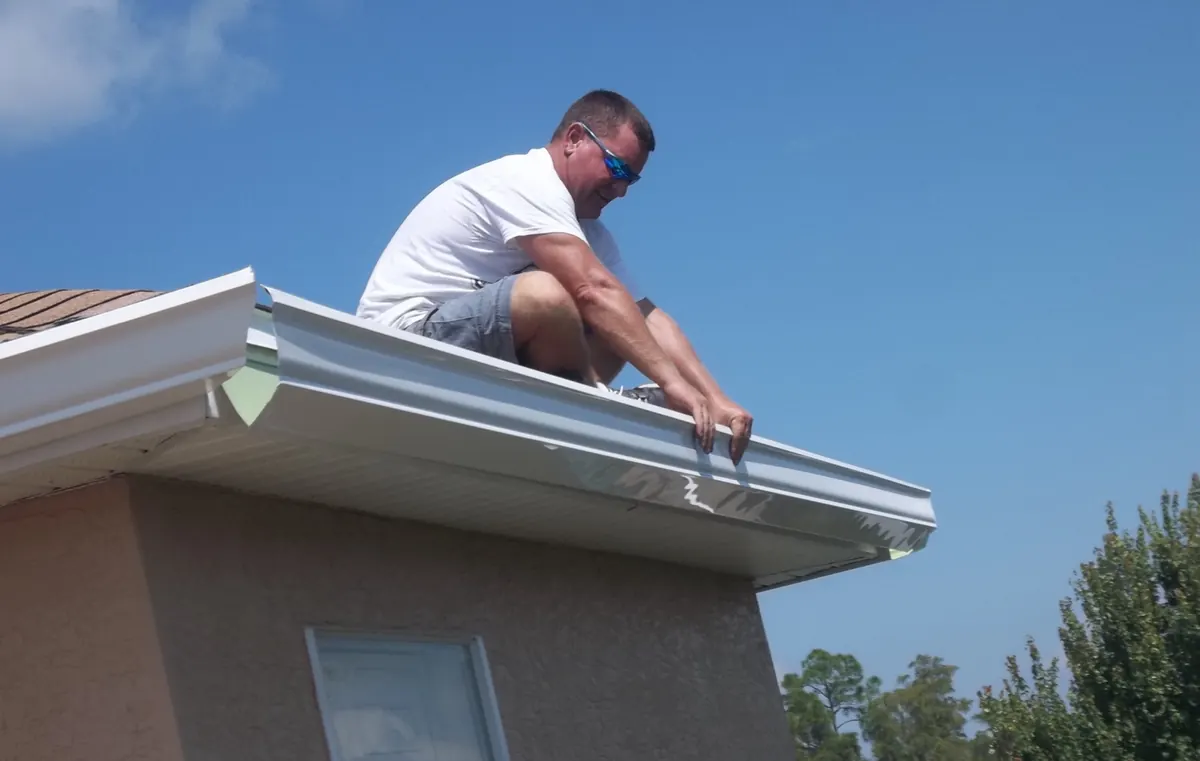
Screens, reverse-curve, brush and foam
Screens
Screens are the cheapest guard that sits on top of the gutter, and many go on with no tools. The holes are the problem here: pine needles and small seeds pass through and lodge in the trough. Bob Vila also warns that screens can be knocked loose by high wind or falling branches, and that prying up shingles to fit them can void some roof warranties.
Reverse-curve hoods
Reverse-curve covers rely on water clinging to a rounded lip and turning into the gutter while leaves slide off the front. They handle big leaves well. In a hard downpour, though, water can run straight over the edge, and This Old House notes they handle large water volumes poorly and cost more to clean. In a place where most summer rain comes fast, that is a real trade-off.
Brush and foam inserts
Both sit inside the gutter and are easy to put in yourself. Both are short-term fixes. This Old House gives brush guards a 3 to 5 year lifespan and foam 2 to 5 years, and both need regular upkeep. Foam is the weakest in heavy rain: Bob Vila notes it can saturate quickly and let the gutter overflow, and it can grow mold in a damp climate like ours.
The downsides of any gutter guard
Even the best gutter guard is not a "never touch it again" product. Plan on these:
- The top still needs a rinse. Fine pollen and grit can film over the best mesh. A hose or a soft brush clears it.
- Installation decides most failures. This Old House notes that most gutter guards fail because of installation defects, not manufacturing ones. A guard on a gutter with low spots, weeping joints or loose hangers will hide those problems until they get worse.
- Do-it-yourself guards carry no installation warranty. If one is fitted wrong, the repair is on you.
- The up-front cost is real. On a house with no trees over the roof, a couple of cleanings a year may cost less.
How to choose for your house
Start with what actually lands on your roof, then match the guard to it.
| Your situation | What usually works |
|---|---|
| Pines or preserve land behind the house | Stainless steel micro-mesh; nothing coarser stops the needles |
| Palms and oaks over the roof | Micro-mesh; screens let seed pods and tassels through |
| Near the Gulf or a saltwater canal | Stainless mesh, a warranty that covers coastal homes |
| No trees within reach of the roof | Maybe no guard at all; a periodic cleaning may be enough |
| Gutters sagging, leaking or rusting | Fix or replace the gutters first; a guard will not save them |
Your roof matters too. Shingle, metal and tile roofs each need a guard and a mounting that suit them, and a guard that has to be slid under shingles can affect a roof warranty. A guard that fastens to the gutter itself avoids that.
What we install, and why
We install fine micro-mesh on gutter guard jobs because it is the type that copes with both of our problems: small debris and heavy rain. Here is what that looks like:
- The gutter comes first. We clean the troughs, flush the downspouts and check every run for low spots, weeping joints, loose hangers and soft fascia, and we fix what needs fixing before any mesh goes on.
- New gutters or the ones you have. We fit guards to the 6-inch seamless gutters we install, or to your existing gutters if they are sound. If they are not, we will tell you.
- Secured along every run so storm wind cannot lift it, and trimmed clean at corners and outlets so it sits low against the roofline.
- Free written estimate, no deposit, and a lifetime workmanship guarantee.
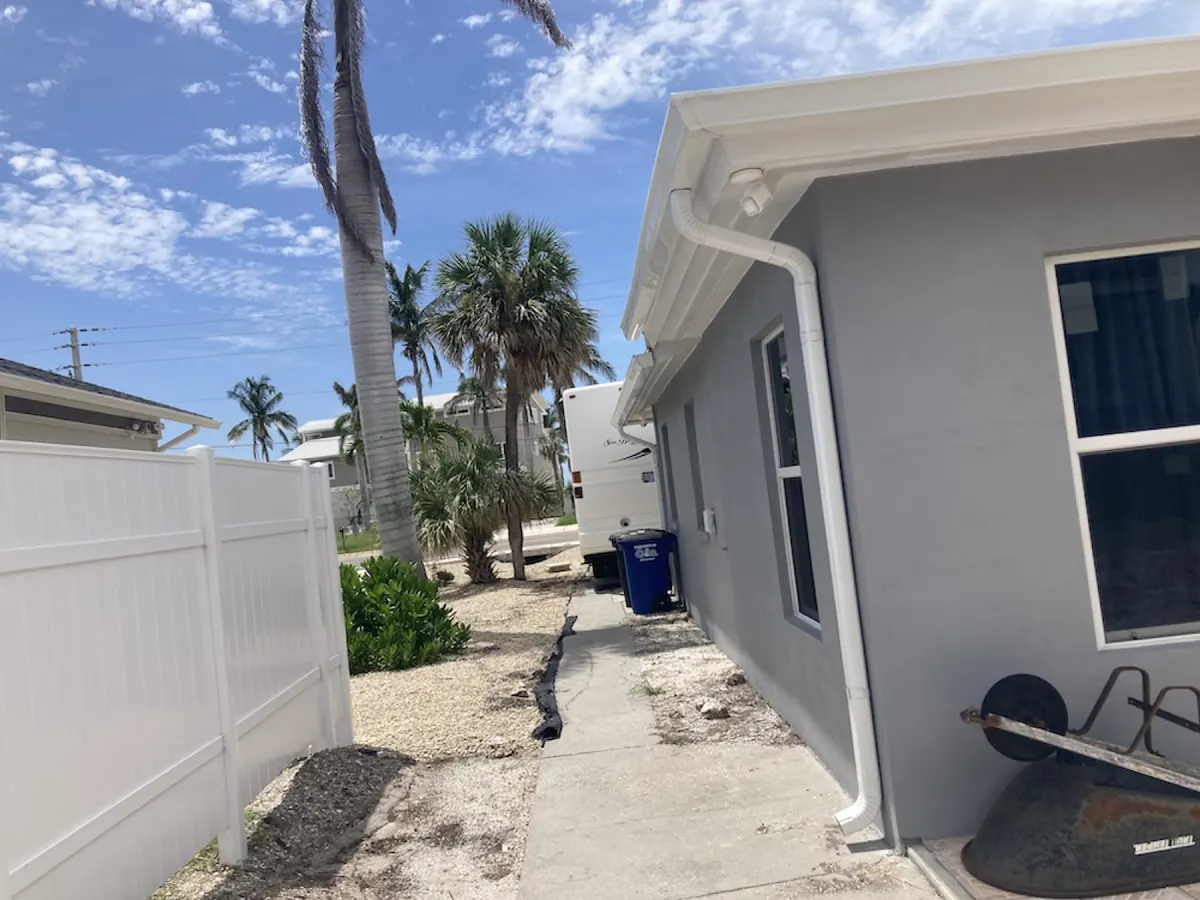
WWJD Gutters has been family-owned since 2007, and we fit gutter guards across Fort Myers, Cape Coral, Naples, Bonita Springs, Punta Gorda and North Fort Myers. If you already have a written quote for guards on the same scope, we will beat it. To find out which guard suits your roof and trees, request a free estimate or call us at (239) 342-5489.
Best gutter guards FAQ
What is the best type of gutter guard?
For most Southwest Florida homes, fine micro-mesh, ideally stainless steel and screwed to the gutter. This Old House's testing found micro-mesh blocked debris most effectively and overflowed the least in simulated heavy rain.
What are the different types of gutter guards?
The five common types are micro-mesh, reverse-curve hoods, mesh or perforated screens, brush inserts and foam inserts. Micro-mesh and screens sit on top of the gutter, reverse-curve hoods cover it, and brush and foam sit inside the trough.
What is the downside of gutter guards?
They cut cleaning down but do not end it: the top still needs an occasional rinse. They cost more up front than a few cleanings, and a guard fitted over a gutter with low spots or loose hangers hides those problems instead of fixing them.
Which gutter guards work best for pine needles?
Micro-mesh. Pine needles and small seeds typically pass through screens and brush guards, and This Old House recommends stainless steel micro-mesh for areas with a lot of pines.
Do gutter guards work in heavy Florida rain?
Micro-mesh handled simulated heavy rain without overflowing in This Old House's testing. Reverse-curve hoods can let a fast downpour run over the edge, and foam can saturate and overflow.
Can gutter guards go on my existing gutters?
Usually, yes, if the gutters are sound. We clean and check every run first, repair leaks and loose hangers, and tell you plainly if the gutters are past saving and a new seamless system is the better value.